

MITO LIFE
More than powerhouses — explore how mitochondria move, connect, and give rise to life and mind.
Mitochondria are living organism. In each of your cell, they have their own DNA, and are always on the move.
The mitochondrial DNA (mtDNA) is packaged as small spherical structures called nucleoids (green) scattered through the mitochondrial network (purple).
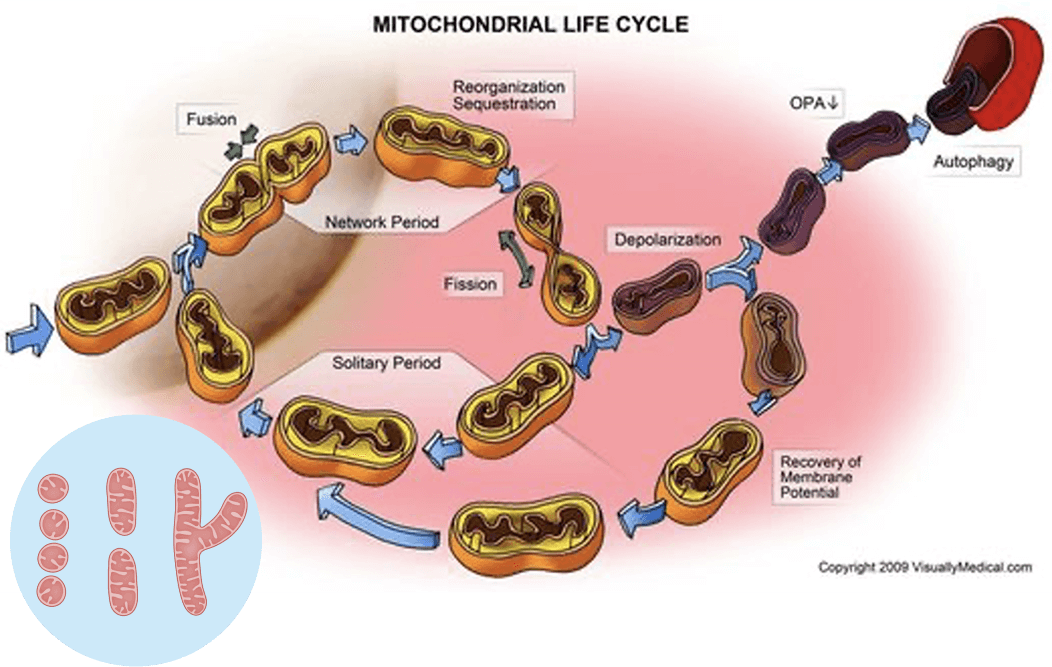
Mitochondria have a life cycle—old ones die (via mitophagy) and new ones are continuously born (via biogenesis). They do this by fissing and fusing with each other.
In most cell types, including brain neurons, mitochondria surround the nucleus. This puts them in a perfect position to turn on and off gene programs.
Mitochondria sense, integrate, and signal information. They act as a dynamic, energetic portal between the dynamic environment and the (epi)genome.
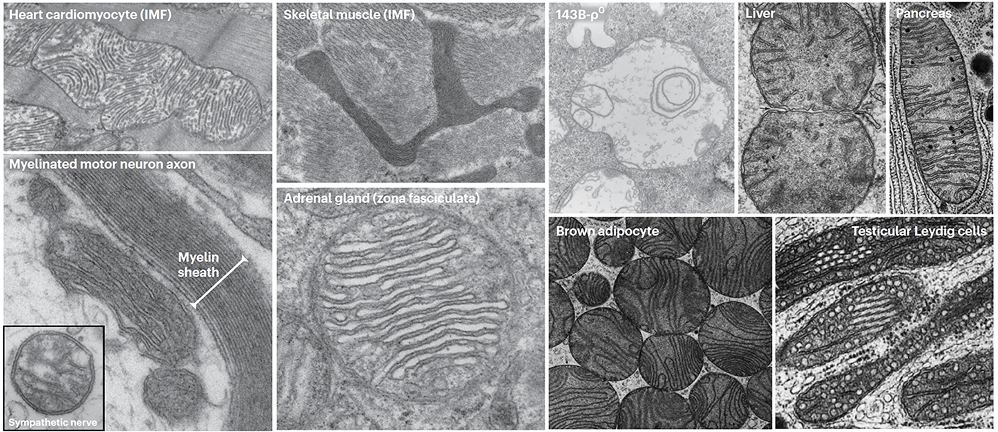
There is a diversity of mitochondria, specialized for different functions. Those can be examined through MitotypeExplorer v1.0.
In isolated liver cells, mitochondria (purple-orange) form extensive networks spreading and squirming through the cytoplasm, surrounding the nucleus (green).
Mitochondria talk to each other—they form a social collective connected through:
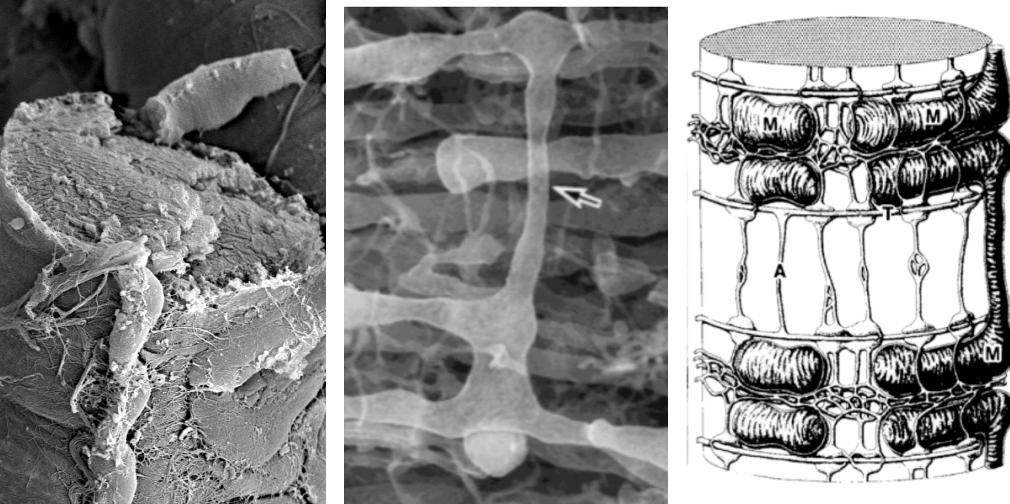
In some cells like your muscles, mitochondria are tightly packed, squished against other parts of the cell.
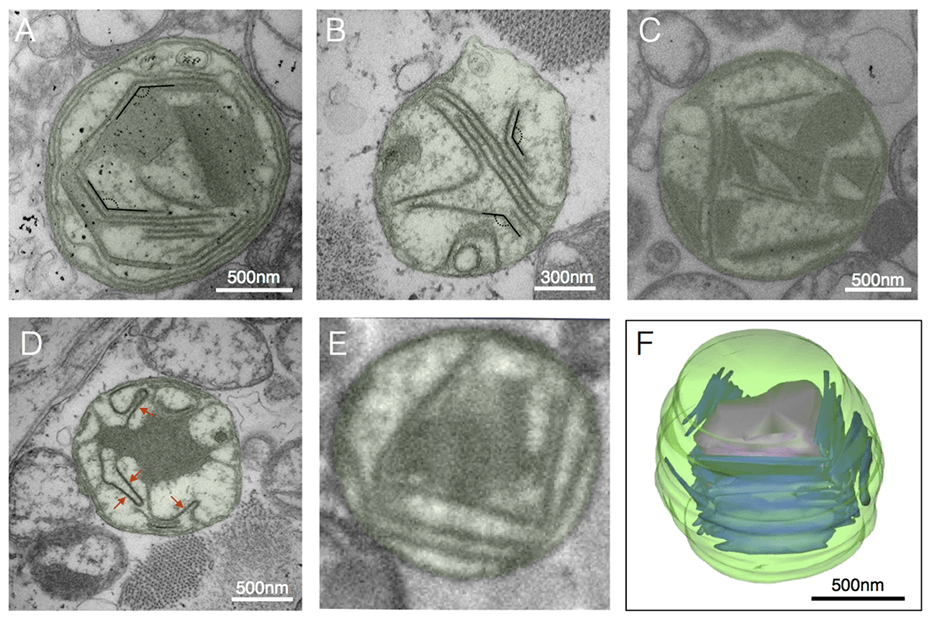
In diseases where energy cannot flow properly through mitochondria, they can look alien-like.
The inside of mitochondria is layered with “cristae” that’s where electrons jump on oxygen to turn into water, where the membrane potential is generated.
Deep within the folds of each cristae are thousands of proteins that make up the oxidative phosphorylation (OxPhos) system, respiring and making ATP.

