
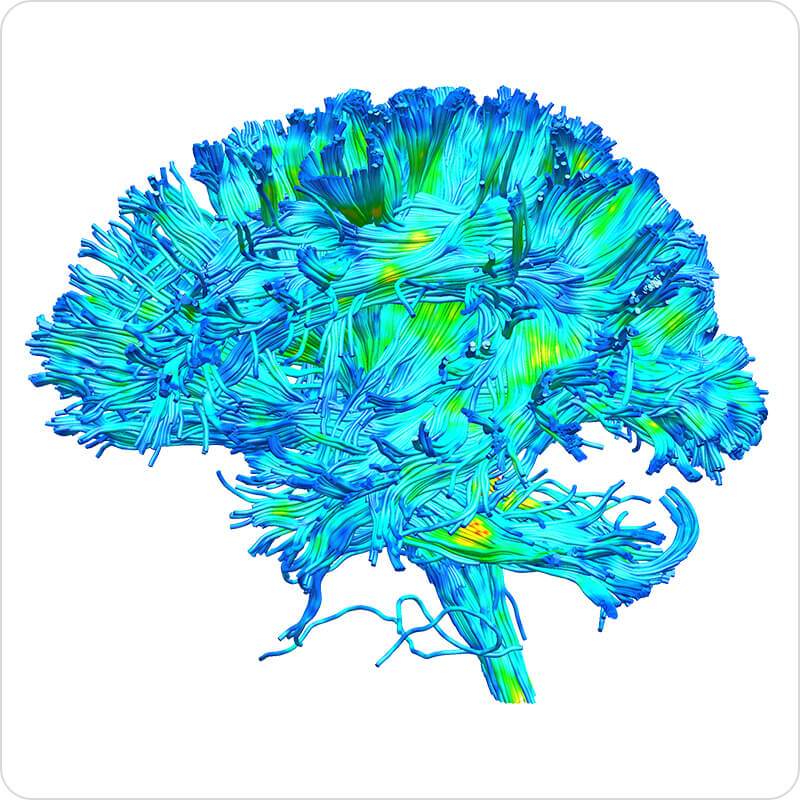
Image credit: Kanzaki et al. Circulation 2010

Here we're discovering energetic principles connecting mind and mitochondria.

ENERGY unpacks the science behind our mitochondria and our energetic nature, exploring how we heal and transform into the best version of ourselves.

EHI accelerates the cultural, scientific, and technological transformation that empowers people to harness their energy and live to their full potential.
Image credit: Kanzaki et al. Circulation 2010
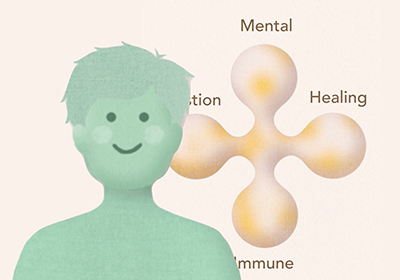
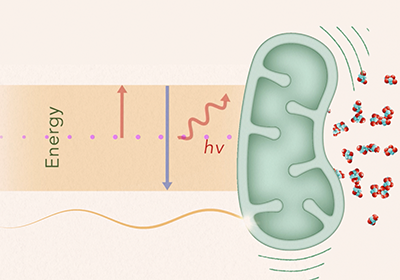
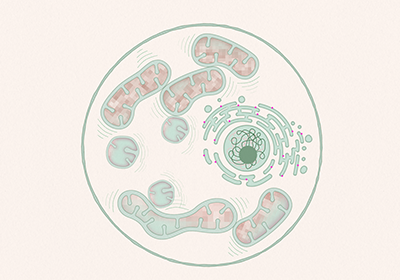
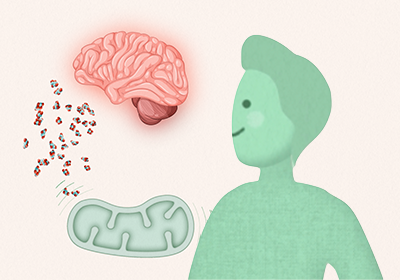
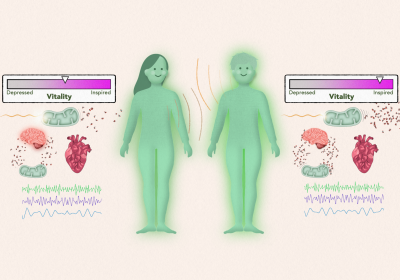
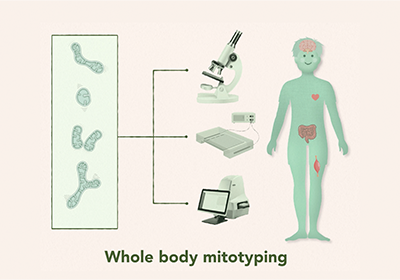

EHI pioneers Healing Science. As the first research institute to focus on energy—the missing dimension of medicine—EHI will empower us to fulfill our collective potential.



EHI empowers people, families, and communities to live to their full potential by strengthening the scientific understanding of an energy-centric view of health and healing, and by translating discoveries into technologies that help people understand their energy, make informed decisions of their health, and contribute to a cultural shift toward resilience and wellbeing.


EHI’s vertically-integrated institutional program supports outstanding collaborative research teams to tackle big Healing Science questions and develop new technologies with direct potential to touch human lives.


EHI changes how science is done for this and future generations. Through external grants, knowledge sharing programs and conferences, EHI empowers scientists and practitioners to develop and adopt new Healing Science research practices, tools, and approaches.

His fiery spirit matured through years of hockey playing, recovering from injuries, and discovering a fascination for the human body. His mother, Isabelle Choquette, is a passionate home care nurse and entrepreneur who founded Santérégie to do what she loved most — connecting with people — giving her three sons and daughter the ability to go to college. On occasions after evening hockey practices, she would take Martin on emergency patient visits. Martin learnt early about the natural arc of life and the struggle and beauty of healing and transformation.

At age 18 in 2003, Martin cycled solo across Canada. This helped him learn enough English to start college at McGill University the next year, and marked his transition from being a hockey player to a few exhilarating years of competitive cycling.
Intense training-recovery cycles, racing with some of the best professional cyclists in North America, and periods of healing from accidents and injuries brought him experiences and life lessons about how strong the mind-body unit can be pushed, and what energy feels like. He learnt first hand — through experience and science — how nutrition and sleep are the basis of restoration, and what healing feels like.

At McGill, Martin spent four years (B.Sc. Honors in Physiology) working in a neuroimmunology lab, followed by four years of graduate school (PhD in mitochondrial biology of aging). His work combined mitochondrial bioenergetics, exercise physiology, cellular imaging, and other methods.
Simultaneously, he was a member of the Psychosocial Oncology Training Program where he trained in psychosocial sciences; and the Systems Biology Training Program where he learnt computational biology. Over those formative years of discovering his path, Martin crossed an unusual number of disciplinary boundaries and techniques from pre-clinical and clinical research, and transdisciplinary theory. As a member of the Whole Person Care program at McGill, Martin learned about contemplative practices including meditation, spirituality, and medical education.

Aching from the lack of attention to the human experience and mind-body processes in his undergraduate training, Martin enrolled in a 3-year training program in holistic medicine at the Montreal Institute of Classical Homeopathy. Agnostic around the science behind homeopathy, Martin immersed himself in the art of case taking, learning to guide individuals through the physical symptoms, mental, emotional, and experiential dimensions of their suffering. Through hundreds of hours in his clinical office over a 5-year period, Martin was fortunate to connect with the experiential side of disease with dozens of individuals, teaching him about that side of dis-ease which science currently can’t access.

In 2012, Martin moved to Philadelphia to train with Doug Wallace, a mitochondrial geneticist who discovered that we get our mitochondria from our mother and that defects in the mitochondrial DNA can cause human diseases. As a postdoctoral fellow, Martin discovered physical evidence that mitochondria exchange information with each other (transmitochondrial cristae alignment), that mitochondria regulate >66% of the human genome, and that mitochondrial functions regulate stress response signatures in mice. These discoveries set the stage for a novel program of research investigating life from organelle-to-organism.

In 2015, Martin opened the Mitochondrial Signaling Laboratory at Columbia University, in New York City. Through cutting edge imaging, his team rapidly identified mito-mito communication structures including nanotunnels in patients with rare mitochondrial diseases, mapped the sub-cellular behavior of mutant mitochondria, and developed a novel mitochondrial health index (MHI) to quantify energy transformation capacity with a precision and throughput not previously possible, providing the first directional evidence in humans of a mind-mitochondria connection. Martin’s team then developed the Cellular Lifespan Study, discovered that human hair greying is reversible, and showed that mitochondria in specific brain regions predict anxiety-related behaviors in genetically identical mice. Through this work recognized by several early-career awards Martin has led mitochondrial science towards a more holistic vision.
With his mentor neuroscientist Bruce McEwen, Martin developed the concept of Mitochondrial Allostatic Load — MAL. This led to a landmark pair of 2018 papers on Mitochondria and Psychological Stress. Subsequent studies using the best of mitochondrial science examined how subjective experiences relate to molecular processes within mitochondria — the mind-mitochondria connection.
In Martin’s lab, studies in mice, cultured human cells, human brains, and whole people have contributed to understanding the role of energy in general, and the Mitochondrial Information Processing System (MIPS) in particular, in regulating psychobiological responses. Profiling brain mitochondria in relation to both positive and negative experiences, Martin’s team including Caroline Trumpff ushered a new dimension to mitochondrial psychobiology, revealing the energetic demands of mental stress. This included discovering that mitochondrial biomarkers–GDF15, FGF21, cf-mtDNA–are induced by mental stress. Martin’s group is now examining the energetic dimension of psychedelics.

In 2019, Noah was born. This was the greatest blessing in Martin’s life. Among the precious moments that fatherhood brings to his life are cycling together, hiking in the woods among trees, and exploring the endless ‘why' of things. The curiosity of life, unfolding.
To see your child developing, learning, and growing is to see the movement of life unfolding in a deeply personal way. It humbles you, challenges you, and teaches you. No matter how lucky a human being you are, life–it seems, always has to be hard. That’s how we learn and evolve. That’s how we grow. That’s how we become better people. Being a parent brought a deeper dimension to Martin’s life.

Although not a medical doctor, since 2016 Martin devotes a half-day per week to be in the clinic where he has followed individuals with rare mitochondrial disorders. This clinical experience grounds his thinking and provides him with continued exposure to the real life consequences of impaired mitochondrial biology. What does it feel like when your mitochondria don’t work the way they should? How does life respond to excessive energy resistance in mitochondria?
To formally address these questions and translate his earlier pre-clinical findings, Martin developed and led the Mitochondrial Stress, Brain Imaging, and Epigenetics (MiSBIE) study. With MiSBIE, Martin’s outstanding team of collaborators have examined how mitochondria and systemic energy metabolism respond to mental stress–including neural, immune, endocrine, metabolic, and affective domains of psychobiology. In 2024, Martin co-organized the first Banbury Mitochondrial Psychology Meeting with Carmen Sandi.

In 2023, Martin received the endowed Chair in Energy and Health and became co-director of the Columbia Science of Health (SOH) program at the Robert N Butler Columbia Aging Center at the Mailman School of Public Health. Drawing from science and experience, and from a cross-disciplinary first-principles view of health, Martin proposed that health is best understood as a field-like state stemming from energy, communication, and structure. This led to the concept of “Intrinsic Health”, a framework to develop novel empirical measures of health and its individualized determinants.
To examine the energetic dimension of the healing process, Martin and his team designed the Mitochondrial Daily Energy Expenditure (MDEE) study. Together, MDEE and MiSBIE set the stage for developing and deploying personalized multi-omic signatures reflecting subjective experiences, mitochondrial defects, and the restorative, pro-healing state of sleep.

In 2025, Martin drafted a 25-year vision and founded the Energy and Healing Institute — EHI.
Feeling the limits of purely academic pursuits that solely reward papers to grants rather than real-world impact, Martin has dedicated his life to accelerating the socio and scientific transformation towards a healthier, more sustainable future where each person is empowered to reach their full potential.
Martin has assembled an exceptional team of inspired friends, partners, funders, and colleagues aligned with EHI’s ambitious vision. Martin’s research and leadership towards bridging the science of energy and the human experience serves as a foundation for the new field of Healing Science. As EHI’s Founding Director, Martin oversees the development of EHI’s vertically integrated Cultural Transformation, Intramural Research, Scientific Innovation streams.


